
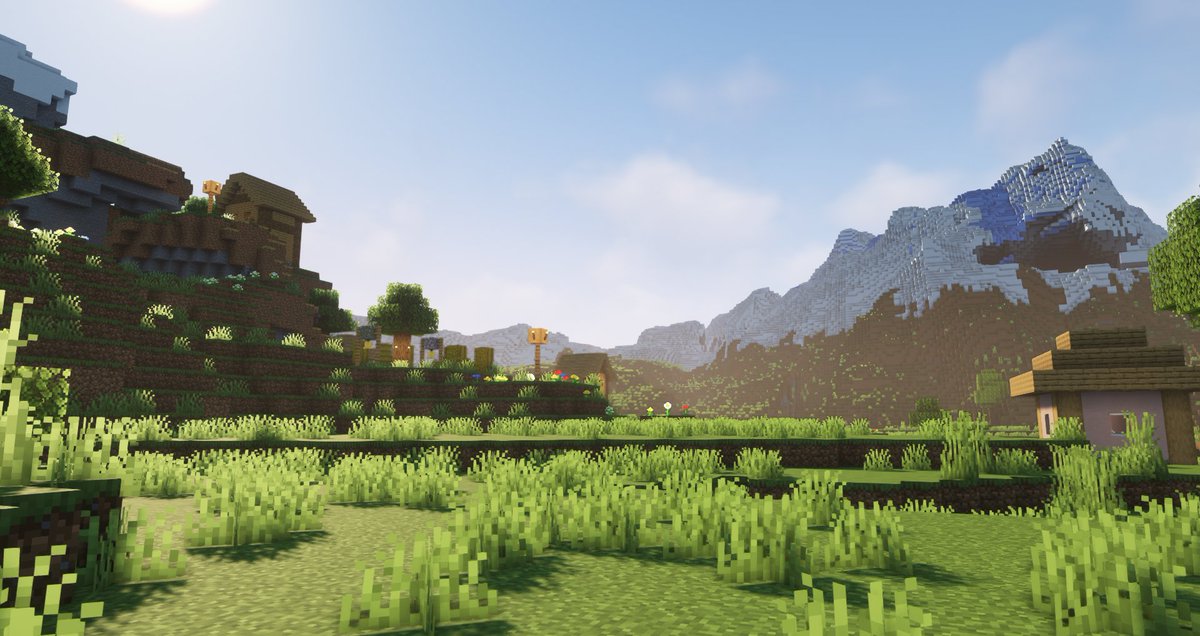
A Presumably novel Idea
A few weeks ago I stumbled across a peculiar digital experiment conducted by the YouTuber Ish. He had gathered one thousand players in Minecraft and divided them between two islands. The first was rich in resources and relatively hospitable; the second was barren, hostile, and unforgiving. The rules were simple and brutal: death is permanent, do as you please.
At first glance this may seem like just another online stunt to entertain an audience. But as I watched the video, and replayed its events in my head a few days after (the video was magnificent by the way, I highly recommend you watch it here) while waiting for my email inbox to refresh, a novel thought struck me. Is not a hardcore multiplayer Minecraft server, like the one ish developed, a rare and compelling digital exemplification of the state of nature that philosophers once theorised about but could never observe?
In the time of Hobbes, Locke, and Rousseau, the state of nature remained a purely hypothetical construct, a thought experiment. None of them could simulate the aggregate behaviour of men and the environment in a controlled yet complex way. Each account was necessarily coloured by abstraction, oversimplification, and human bias. But here, in the peculiar architecture of Minecraft, we find a platform that—though imperfect—allows for a strikingly credible simulation of stateless, lawless existence. With permanent death, finite resources, environmental hostility, and the freedom to cooperate or betray, the game captures many of the critical elements philosophers once speculated about but could not test.
This Exhaustive list I put together should help convince you that , atleast to some extent, Minecraft can serve as an effective and and accurate reproduction of the state of nature:
- Resource Distribution: Uneven abundance or scarcity across randomly generated terrain
- Environmental Hostility: Harsh biomes and hospitable biomes that amplify survival difficulty.
- Permanent Death: Hardcore mode enforces irreversible consequences, and enhances the perceived value of achievements.
- Hunger & Health: Constant need to manage sustenance and survival.
- Competition for Resources: Conflict or cooperation over finite supplies.
- Freedom of Action: Minimal rules, enabling emergent behaviours.
- Social Structure Formation: Tribes, factions, hierarchies created by players.
- Violence & Morality: Theft, murder, rules, enforcement—or their absence.
- Environmental Hazards: Weather, disasters, player-induced dangers.
- Territoriality: Land claimed, defended, and contested.
- Population Dynamics: Mass death events, migration, survival pressures.
- No External Law: Authority emerges solely from within.
- Adaptation & Innovation: Necessity to invent, build, and discover.
- Randomness & Unpredictability: Procedural worlds and player choice (worlds may not necessarily be infinite).
- Communication: Diplomacy, trade, betrayal—both in and out of game (there were accusations of some players “meta-gaming” in this particular expirement).
- Resource Exhaustion: Depletion or regeneration shaping strategy.
- Mobility & Exploration: Search for safer or richer territory.
- Identity & Reputation: Emergent social consequences for behaviour.
With these parameters in place, Minecraft becomes less a game and more a crude but potential laboratory for political philosophy. With a collection of modpacks, one may create a close simulation of the state of nature. To fully appreciate this, however, we must revisit the theories of Hobbes, Locke, and Rousseau, and see how their predictions fare in a digital wilderness.
Thinkers
Thomas Hobbes
“In such condition, there is no place for industry; because the fruit thereof is uncertain: and consequently no culture of the earth; no navigation, nor use of the commodities that may be imported by sea; no commodious building; no instruments of moving, and removing such things as require much force; no knowledge of the face of the earth; no account of time; no arts; no letters; no society; and, which is worst of all, continual fear, and danger of violent death; and the life of man, solitary, poor, nasty, brutish, and short.”
Hobbes, Leviathan (1651), Chapter XIII
Hobbes: War of All Against All
To Thomas Hobbes, the state of nature was a place of perpetual insecurity. Life without a sovereign power, he declared, was “solitary, poor, nasty, brutish, and short.” Minecraft validates much of this grim vision. On a hardcore server, paranoia is not irrational but rational. At any moment a neighbour might ambush you for your resources, diamonds, territory or even pure vengeance. Violence is not deviation but default. Alliances, when they form, are fragile pacts of convenience, temporary measures to defer the consequences of chaos. The looming reality of permanent death incentivizes pre-emptive aggression, however only if there is a perceivable high guarantee of victory as was frequently seen in Ish’s experiment.
In summary, the theory of natural selection, where the strong rule still applies, but only in the context of the Machiavellian principle:
“War is not to be avoided, but is only deferred to the advantage of others.”
Machiavelli, Il Principe (1532), Ch. III.
John Locke
“The state of nature has a law of nature to govern it, which obliges every one: and reason, which is that law, teaches all mankind, who will but consult it, that being all equal and independent, no one ought to harm another in his life, health, liberty, or possessions.”
Locke (1689) Two Treatises of Government, Second Treatise, II.6
Locke: Natural Rights and Social Contracts
Locke, by contrast, believed the state of nature was not anarchy but a realm governed by natural law and rights life, liberty, and property. Ish’s experiment demonstrated this too. On many servers, even absent authority, norms emerge: unspoken agreements about respecting claimed land, distributing surplus food, or punishing theft. Rational players see the benefit of restraint, discovering that cooperation ensures survival better than perpetual violence. Miniature constitutions arise: councils, treaties, even taxation systems. Locke’s claim, that humanity is capable of reasoned cooperation even without central authority, seems proven here. However the reasons for this was not out of respect for the the respect for the in alienable rights that Locke outlined in his treatises, rather it was motivated by a desire for peace over chaos.
Jean-Jacques Rousseau
“Nothing is so gentle as man in his primitive state, when, placed by nature at an equal distance from the stupidity of brutes, and the fatal enlightenment of civil man, he is restrained by instinct and pity from doing evil.”\
Rousseau, Discourse on the Origin and Foundations of Inequality Among Men, 1755
Rousseau: The Noble Savage
For Rousseau, man in the state of nature was pure, free, and uncorrupted. Minecraft provides a fleeting glimpse of this vision at the server’s inception. Players spawn, marvel at the landscape, share food, and build together in a spirit of innocence. But scarcity soon intrudes. With the discovery of property diamonds, iron, secure plots of land inequality emerges, dividing the fortunate from the desperate. In Rousseau’s terms, this marks the end of the natural state: the idyll gives way to hierarchy, comparison, and competition, the first stirrings of civilization and its discontents. This is exactly what was surmised by the figure Fluxion and was the initial sentiment in Island 1, which shows that that Rosseau was right to an extent. Yet the residents of Island 1, which was more barren and inhospitable, eventually adapted and grew content with their properties, ironically, Island 2 was the one that experienced noticeably more conflict episodes over the duration of the experiment.
Conclusion
There is is certainly much more that can be said about what the results and outcome of the experiment reflect, prove and disprove about what these thinkers have asserted about the state, however what makes Ish’s experiment, and indeed Minecraft itself, so remarkable is not that it proves any one philosopher right. It is that it vividly enacts all three. Hobbes’s violence, Locke’s contract, Rousseau’s innocence all appear, rise, and fade within hours or days. The game compresses centuries of political development into an accelerated cycle, allowing us to witness, in digital microcosm, the patterns philosophers only theorized.
This matters because the state of nature is no longer confined to parchment and imagination. Minecraft is certainly not reality, pain is not felt, hunger reduced to a bar. Yet the behaviors it produces, when real humans confront scarcity, risk, and freedom, are telling. It is a mirror, a crude one yes, but one that is nonetheless reflective of what lies within us when rules fall away.
And that is why I will never look at this game, or at the multitude of hardcore Minecraft servers that ebb and flow with political energies across cyberspace, in the same way again; for their fleeting empires echo the unchanging truth that wherever men gather, politics follows.
Leave a Reply